
If you are preparing for the Spanish practical driving test and your Spanish is limited, this is the most important page you will read. The practical test is conducted entirely in Spanish, and your examiner will give all instructions in Spanish without exception. The good news is that the vocabulary is finite, predictable, and entirely learnable. This guide covers every phrase your examiner is likely to use, organized by driving situation, with pronunciation guidance to help you recognize the words when spoken aloud.
At SpanishDrivingTest.com, we have compiled this vocabulary list based on years of experience preparing foreign residents for the DGT practical exam. These are not theoretical phrases pulled from a textbook. These are the actual words and commands that real examiners use during real tests across Spain. Study them, practice them during your driving lessons, and you will walk into your practical test with confidence.
Print this vocabulary list or save it to your phone. Review it before every driving lesson and ask your instructor to use these exact phrases during practice. By test day, these commands should trigger automatic driving responses, not mental translation.
Pre-Test Phrases: Before You Start Driving
The test begins before you touch the steering wheel. The examiner will greet you, ask you to prepare the vehicle, and confirm you are ready. Here are the phrases you will hear in those first moments.
- Buenos dias / Buenas tardes (BWEH-nos DEE-as / BWEH-nas TAR-des) - Good morning / Good afternoon. The standard greeting.
- Ponga el cinturon de seguridad (PON-ga el thin-too-RON deh seh-goo-ree-DAD) - Put on your seatbelt. One of the first instructions you will hear.
- Ajuste los espejos (ah-HOOS-teh los es-PEH-hos) - Adjust the mirrors. The examiner expects you to set up all three mirrors.
- Ajuste el asiento (ah-HOOS-teh el ah-see-EN-toh) - Adjust the seat. Make sure you are comfortable and can reach all controls.
- Cuando este listo, arranque el motor (KWAN-doh es-TEH LEES-toh, ah-RRAN-keh el mo-TOR) - When you are ready, start the engine.
- Vamos a comenzar (BAH-mos ah ko-men-THAR) - We are going to begin.
- Esta preparado? (es-TAH preh-pah-RAH-doh) - Are you ready? A simple "si" is the expected response.
Basic Directions: The Commands You Will Hear Most
Directional commands form the backbone of the practical test. You will hear these phrases repeatedly throughout the exam. They are short, direct, and once you learn them, impossible to confuse. Focus on these first because they account for the majority of examiner communication.
- Gira a la derecha (HEE-rah ah lah deh-REH-chah) - Turn right. The most common directional command.
- Gira a la izquierda (HEE-rah ah lah ith-kee-ER-dah) - Turn left.
- Sigue recto (SEE-geh RREK-toh) - Continue straight ahead. You will hear this frequently.
- Sigue todo recto (SEE-geh TOH-doh RREK-toh) - Keep going straight. Emphasis on continuing forward.
- Toma la siguiente a la derecha (TOH-mah lah see-gee-EN-teh ah lah deh-REH-chah) - Take the next right.
- Toma la siguiente a la izquierda (TOH-mah lah see-gee-EN-teh ah lah ith-kee-ER-dah) - Take the next left.
- Al final de la calle, gira a la derecha (al fee-NAL deh lah KAH-yeh, HEE-rah ah lah deh-REH-chah) - At the end of the street, turn right.
- Al final de la calle, gira a la izquierda (al fee-NAL deh lah KAH-yeh, HEE-rah ah lah ith-kee-ER-dah) - At the end of the street, turn left.
- En la proxima calle (en lah PROK-see-mah KAH-yeh) - At the next street. Usually followed by a directional command.
- Siga las indicaciones hacia... (SEE-gah las in-dee-kah-thee-OH-nes AH-thee-ah) - Follow the signs toward... The examiner may name a destination or direction.
Roundabout and Intersection Commands
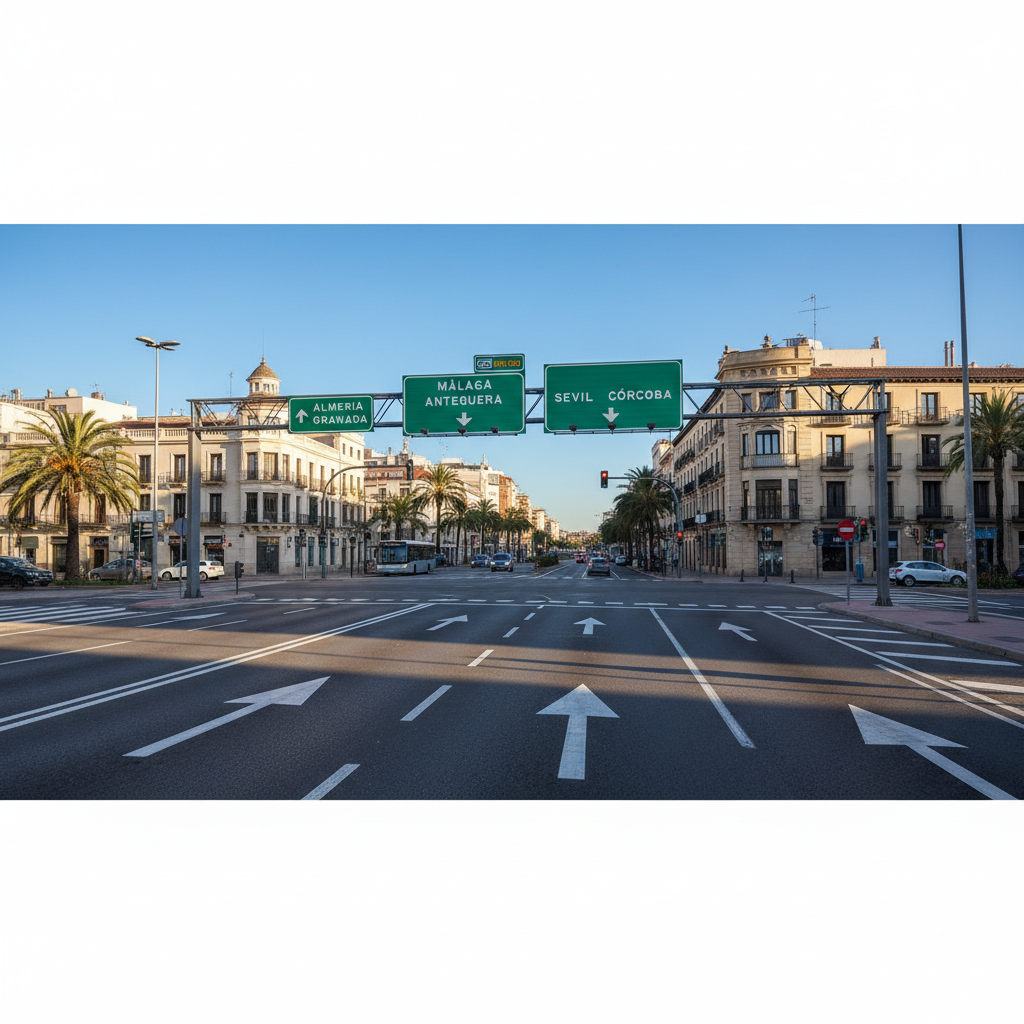
Roundabouts are extremely common in Spanish cities and towns, and you will almost certainly encounter at least one during your test. The examiner will tell you which exit to take using a simple numbered system. Intersection commands are equally straightforward.
- Tome la rotonda (TOH-meh lah rro-TON-dah) - Take the roundabout. This tells you a roundabout is ahead.
- Primera salida (pree-MEH-rah sah-LEE-dah) - First exit.
- Segunda salida (seh-GOON-dah sah-LEE-dah) - Second exit. The most common roundabout instruction.
- Tercera salida (ter-THEH-rah sah-LEE-dah) - Third exit.
- Cuarta salida (KWAR-tah sah-LEE-dah) - Fourth exit. Less common but possible on larger roundabouts.
- Toda la vuelta en la rotonda (TOH-dah lah BWEL-tah en lah rro-TON-dah) - All the way around the roundabout (essentially a U-turn via roundabout).
- Ceda el paso (THEH-dah el PAH-soh) - Yield / Give way. Used at yield signs and when merging.
- En el cruce (en el KROO-theh) - At the intersection / crossroads.
Stopping, Starting, and Parking Commands
These commands relate to controlling the vehicle position. Parking maneuvers are a standard part of the practical test, and the examiner will use specific phrases to tell you what type of parking to perform and where to do it.
- Pare aqui (PAH-reh ah-KEE) - Stop here.
- Pare en un lugar seguro (PAH-reh en oon loo-GAR seh-GOO-roh) - Stop in a safe place.
- Estacione el vehiculo (es-tah-thee-OH-neh el veh-EE-koo-loh) - Park the vehicle.
- Aparque en linea (ah-PAR-keh en LEE-neh-ah) - Parallel park. Park in line with the curb.
- Aparque en bateria (ah-PAR-keh en bah-teh-REE-ah) - Bay parking. Park perpendicular to the curb.
- Marcha atras (MAR-chah ah-TRAHS) - Reverse. Drive backwards.
- Haga marcha atras (AH-gah MAR-chah ah-TRAHS) - Do a reverse. Perform a reversing maneuver.
- Arranque el motor (ah-RRAN-keh el mo-TOR) - Start the engine.
- Apague el motor (ah-PAH-geh el mo-TOR) - Turn off the engine.
- Puede continuar (PWEH-deh kon-tee-noo-AR) - You may continue. Resume driving.
Speed, Gear, and Vehicle Control Commands
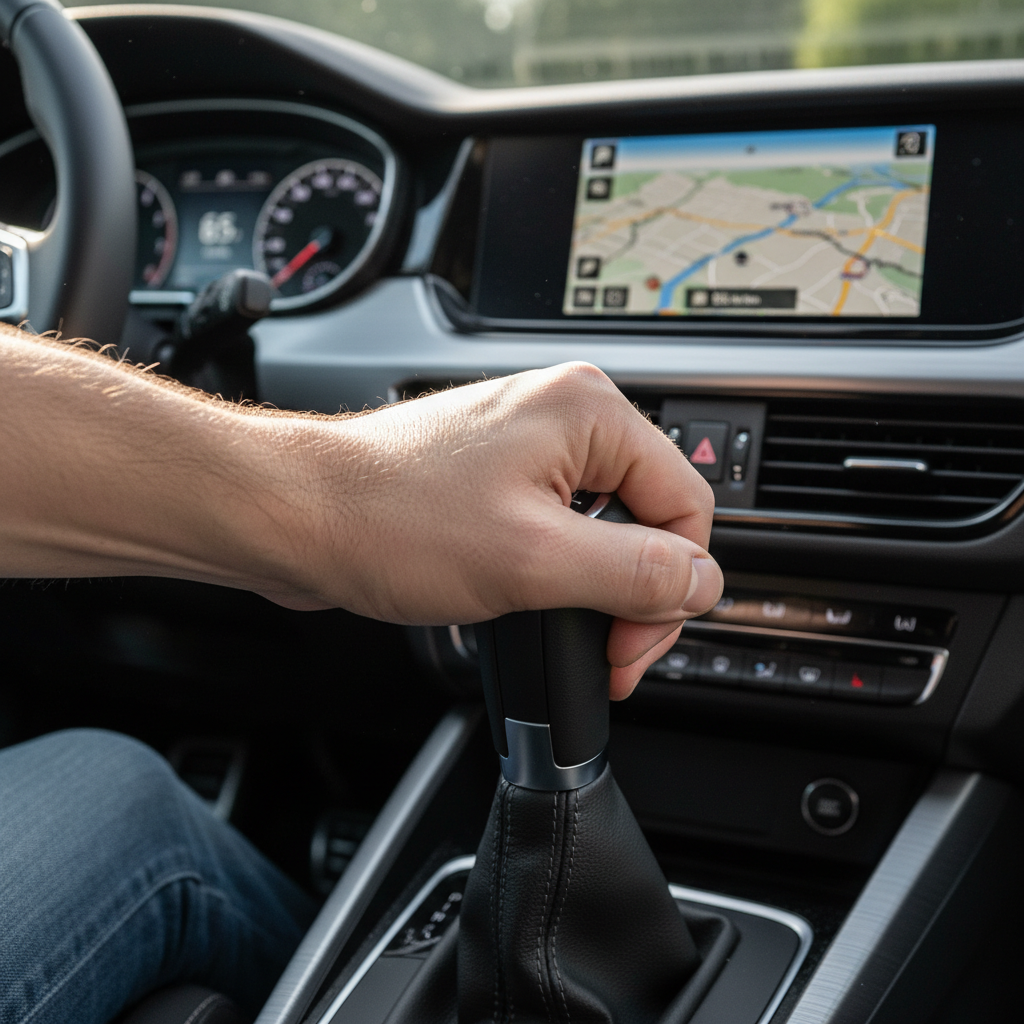
Occasionally, the examiner may give instructions related to your speed or vehicle handling. These are less common than directional commands but important to know, especially if you are driving a manual transmission vehicle.
- Reduzca la velocidad (rreh-DOOTH-kah lah veh-loh-thee-DAD) - Reduce your speed. Slow down.
- Cambie de marcha (KAM-bee-eh deh MAR-chah) - Change gear.
- Meta primera (MEH-tah pree-MEH-rah) - Put it in first gear.
- Meta marcha atras (MEH-tah MAR-chah ah-TRAHS) - Put it in reverse gear.
- Ponga el freno de mano (PON-gah el FREH-noh deh MAH-noh) - Apply the handbrake / parking brake.
- Quite el freno de mano (KEE-teh el FREH-noh deh MAH-noh) - Release the handbrake.
- Ponga las luces (PON-gah las LOO-thes) - Turn on the lights.
- Ponga el intermitente (PON-gah el in-ter-mee-TEN-teh) - Use the indicator / turn signal.
Special Maneuvers
The examiner may ask you to perform specific maneuvers that test your vehicle control and spatial awareness. These instructions use distinct vocabulary that you should practice specifically during your lessons.
- Cambio de sentido (KAM-bee-oh deh sen-TEE-doh) - Change of direction / U-turn. You need to turn the vehicle around.
- Haga un cambio de sentido cuando sea posible (AH-gah oon KAM-bee-oh deh sen-TEE-doh KWAN-doh SEH-ah poh-SEE-bleh) - Make a U-turn when possible.
- Incorporese a la via (in-kor-POH-reh-seh ah lah VEE-ah) - Merge onto the road. Used when joining a main road or highway.
- Salga de la via (SAL-gah deh lah VEE-ah) - Exit the road. Used when leaving a main road.
- Entre en el parking (EN-treh en el PAR-king) - Enter the parking area.
- Salga del parking (SAL-gah del PAR-king) - Exit the parking area.
End-of-Test Phrases
- El examen ha terminado (el ek-SAH-men ah ter-mee-NAH-doh) - The test is over.
- Puede parar aqui (PWEH-deh pah-RAR ah-KEE) - You can stop here.
- Apague el motor (ah-PAH-geh el mo-TOR) - Turn off the engine.
- Puede quitarse el cinturon (PWEH-deh kee-TAR-seh el thin-too-RON) - You may remove your seatbelt.
- Hemos terminado (EH-mos ter-mee-NAH-doh) - We are finished.
- Gracias (GRAH-thee-as) - Thank you. Always appropriate to say at the end.
Useful Phrases You Can Say
While the test is primarily about understanding the examiner, there are a few phrases you may want to use yourself. These are entirely optional, but they can help in moments where you need clarification or want to communicate something to the examiner.
- Si (SEE) - Yes. The simplest acknowledgment.
- Puede repetir, por favor? (PWEH-deh rreh-peh-TEER, por fah-VOR) - Can you repeat, please? Use this if you did not hear or understand.
- No he entendido (noh eh en-ten-DEE-doh) - I did not understand. The examiner will rephrase or repeat.
- Mas despacio, por favor (mahs des-PAH-thee-oh, por fah-VOR) - More slowly, please. Ask the examiner to speak slower.
- Aqui? (ah-KEE) - Here? To confirm a location for stopping or parking.
- Estoy listo (es-TOY LEES-toh) / Estoy lista (es-TOY LEES-tah) - I am ready. Use "listo" if you are male, "lista" if you are female.
Pronunciation Tips for Non-Spanish Speakers
Spanish pronunciation is largely phonetic, which works in your favor. Unlike English, Spanish words are generally pronounced exactly as they are spelled. However, there are a few sounds that English speakers commonly struggle with, and getting these right will help you recognize words when the examiner speaks them.
- The letter "j" is pronounced like a strong "h" in English. "Ajuste" sounds like "ah-HOOS-teh," not "ah-JOOS-teh."
- The double "rr" is a rolled or trilled sound. "Arranque" has a rolled "rr" at the start. If you cannot roll your Rs, a strong "rr" sound will suffice.
- The letter "z" and the letter "c" before "e" or "i" are pronounced like "th" in "think" in most of Spain. "Velocidad" sounds like "veh-loh-thee-DAD."
- The letter "h" is always silent. "Haga" is pronounced "AH-gah," not "HAH-gah."
- The stress in Spanish words follows predictable rules. Words ending in a vowel, "n," or "s" are stressed on the second-to-last syllable. Words ending in other consonants are stressed on the last syllable. Accent marks override these rules.
- The "ll" combination is pronounced like a "y" in most of Spain. "Calle" sounds like "KAH-yeh."
You do not need perfect Spanish pronunciation. You need to recognize the words when someone else says them. Focus your practice on listening comprehension, not on speaking. The examiner will be doing the talking.
Practice Exercises to Build Confidence
Learning vocabulary from a list is a good start, but you need to be able to respond to spoken commands in real time while managing the cognitive demands of driving. Here are exercises that bridge the gap between studying and performing under test conditions.
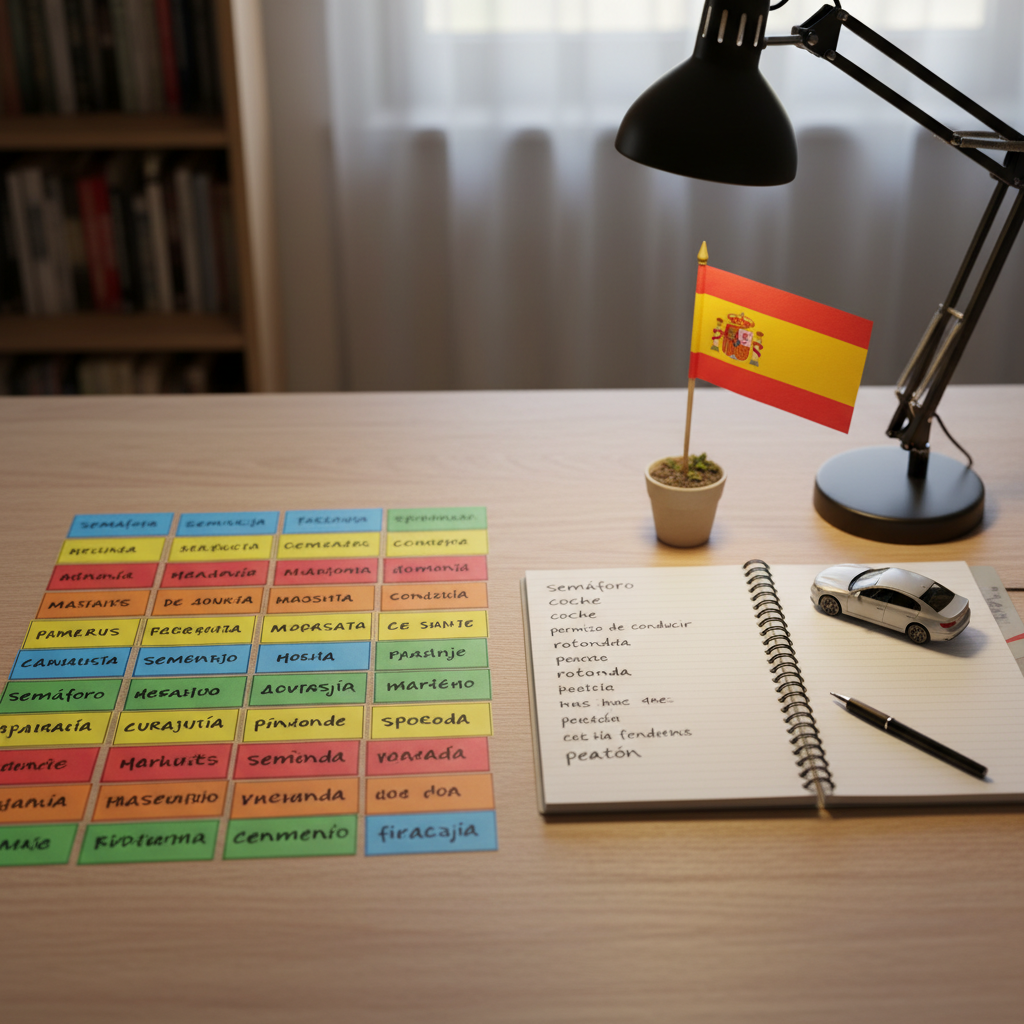
- Flashcard drills: Write the Spanish command on one side and the English meaning plus the driving action on the other. Test yourself until you can respond instantly to each card.
- Audio practice: Record yourself or your instructor saying each command. Play the recordings randomly and practice responding by describing the driving action out loud.
- Passenger seat practice: Sit in the passenger seat while a friend drives. Read commands from this list in Spanish and check whether your friend performs the correct action. Then switch roles.
- Mental driving: Close your eyes, imagine you are on a familiar road, and have someone read you a sequence of commands. Visualize yourself executing each one.
- Lesson simulation: During your final driving lessons before the test, ask your instructor to give all instructions exclusively in Spanish with no English backup. This is the closest simulation to the real test.
The Flashcard Approach: Why It Works
Flashcards are not just for students in school. They are one of the most scientifically supported methods for memorizing discrete pieces of information quickly. For driving test vocabulary, flashcards work exceptionally well because the material is perfectly suited to the format: each item is a short phrase with a clear, unambiguous meaning.
Create a set of physical flashcards or use a digital flashcard app with spaced repetition. Start with the basic direction commands, since those are the most frequent. Add parking and maneuver commands next. Finish with the less common phrases like speed and gear instructions. Review daily for at least two weeks before your test. By the end of this process, you should be able to hear any command on this list and know the correct driving response within one to two seconds.
Focus on the top 15 most common commands first: gira a la derecha, gira a la izquierda, sigue recto, toma la siguiente, tome la rotonda, primera/segunda/tercera salida, pare aqui, aparque en linea, aparque en bateria, marcha atras, cambio de sentido, and incorporese. These will cover approximately 90 percent of what the examiner says.
Final Words of Encouragement
The complete vocabulary list on this page contains every phrase you are realistically likely to encounter during the Spanish practical driving test. It may look like a lot when you see it all together, but consider this: most of the phrases are short, many share common words (derecha, izquierda, rotonda), and you already know some of them from daily life in Spain. When you break it down, you are learning about 40 phrases total, and many of them are variations of the same base command.
Students who prepare with SpanishDrivingTest.com consistently report that the language aspect of the practical test was manageable once they had studied the vocabulary and practiced it during their driving lessons. The key is starting early, practicing consistently, and integrating the vocabulary into your actual driving practice rather than treating it as a separate study task. Learn the words while you drive, and they will be there for you when you need them on test day.