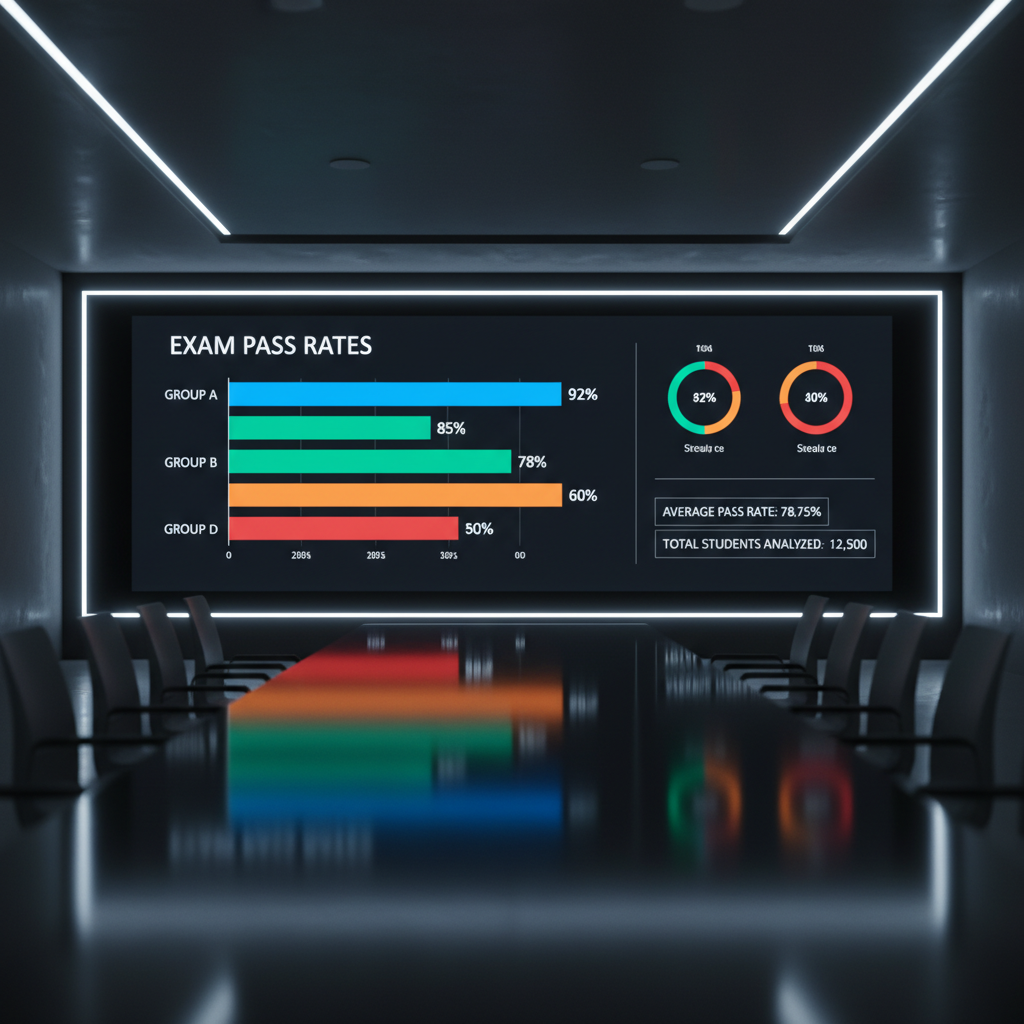
The Spanish DGT theory test has an overall pass rate of approximately 50 percent. That means roughly half of all candidates fail on any given attempt. But when you break the numbers down by nationality, a troubling picture emerges: foreigners taking the exam fail at significantly higher rates than Spanish nationals. Some estimates put the first-attempt pass rate for non-Spanish speakers as low as 30 to 35 percent, depending on the region and language of the exam.
As someone who has spent years helping expats and immigrants navigate the Spanish driving licence process, I have seen firsthand why these numbers are so stark. The good news is that none of the factors contributing to this gap are insurmountable. Once you understand what you are up against, you can prepare accordingly and beat the odds. Let me walk you through the main reasons foreigners struggle and, more importantly, what you can do about each one.
The Numbers: How Bad Is It Really?
The DGT publishes annual statistics on exam performance, and while they do not always break down results by nationality in granular detail, the trends are consistent year after year. The overall national pass rate for the theory exam hovers around 49 to 52 percent. For Spanish-born candidates who studied through traditional autoescuelas, the rate is closer to 55 to 60 percent. For foreign candidates, particularly those taking the exam in a non-Spanish language, the rate drops to between 30 and 40 percent.
These are not small differences. If you are a foreigner preparing for the DGT theory test, you are statistically facing a harder challenge than your Spanish counterparts. Understanding why is the first step toward closing that gap.
The lower pass rate for foreigners is not because the test is objectively harder for them. It is because the preparation resources, language support, and cultural context that Spanish candidates take for granted are often missing or inadequate for foreign candidates. Targeted preparation can eliminate this disadvantage entirely.
Factor 1: Translation Quality and Linguistic Traps
The DGT offers the theory exam in several languages, including English, French, German, Arabic, and others. On the surface, this seems like a generous accommodation. In practice, the translations are often problematic. The exam questions are originally written in Spanish and then translated, sometimes by people who are fluent in the target language but not necessarily experts in driving terminology or test design.
The result is questions that can be grammatically awkward, ambiguous, or use terminology that does not directly correspond to what English speakers would expect. For example, a question about "la calzada" might be translated as "the roadway" when an English speaker would more naturally say "the carriageway" or simply "the road." These subtle differences in terminology can cause confusion, especially under exam pressure when you have 30 minutes to complete 30 questions.
Double negatives are another notorious problem in translated exams. A question like "Which of the following is NOT incorrect?" requires careful parsing in any language, but when the translation is slightly off, it becomes genuinely confusing. Some students report reading a question three or four times and still not being entirely sure what it is asking.

Factor 2: Cultural Differences in Road Rules
Every country has its own driving culture and regulatory framework. If you learned to drive in the United Kingdom, the United States, Australia, or any country outside the EU, you carry assumptions about road rules that may not apply in Spain. These ingrained assumptions are dangerous on the theory exam because they feel correct even when they are wrong.
For example, UK drivers are accustomed to left-hand traffic and have different roundabout entry rules. American drivers may not be familiar with the European priority-to-the-right rule, where vehicles approaching from the right have priority at unmarked intersections. Australian drivers might not know that in Spain, the default urban speed limit is 50 kilometers per hour on single-carriageway roads within built-up areas, reduced to 30 km/h on single-lane roads in residential zones since 2021.
- Priority to the right at unmarked intersections is a fundamental rule in Spain that does not exist in the UK or US in the same way
- Spain has specific rules about overtaking on interurban roads that differ from many other countries
- The Spanish point system starts new drivers with 8 points rather than 12, which is different from most other European systems
- Reflective vest requirements, warning triangle rules, and spare wheel regulations are Spain-specific
- Blood alcohol limits and penalties differ significantly from country to country
Factor 3: Unfamiliar Sign Systems
While European road signs follow the Vienna Convention and share many common elements, there are Spain-specific signs and variations that foreign drivers may never have encountered. Candidates from outside Europe face an even steeper learning curve, as the entire sign system may be unfamiliar. American and British drivers, for instance, are used to text-heavy signs, whereas Spanish and European signs rely primarily on symbols, shapes, and colors to convey meaning.
The theory exam includes a significant number of questions about traffic signs, and getting these wrong is one of the most common reasons for failure among all candidates. For foreigners who have never driven in Europe, this category alone can account for enough errors to fail the exam if not studied thoroughly.
Factor 4: Spain-Specific Regulations
Beyond road signs and general driving rules, the DGT theory exam tests knowledge of Spanish-specific administrative and legal requirements. These include topics like the points-based licence system, mandatory vehicle documentation, ITV inspections (the Spanish equivalent of the MOT or vehicle safety check), insurance requirements, and environmental regulations such as low-emission zones in major cities.
For a Spanish candidate who has grown up hearing about these systems, many of the answers are intuitive or at least familiar. For a foreigner, every single one of these regulations must be learned from scratch. It is an additional body of knowledge that native candidates simply do not have to worry about in the same way.
How Different Nationalities Perform
While detailed statistics by nationality are not always publicly available, anecdotal evidence from autoescuelas across Spain reveals some patterns. Candidates from other EU countries, particularly those from central and northern Europe, tend to perform closest to the Spanish average. This makes sense because they share much of the same road sign system and regulatory framework.
Candidates from Latin American countries often have an advantage with the Spanish language version of the exam but may still struggle with European-specific road rules and signs. British and American candidates tend to perform reasonably well on general knowledge and safety questions but lose marks on Spain-specific regulations and priority rules that differ from their home countries. Candidates from countries with very different driving cultures, such as parts of Asia, Africa, and the Middle East, typically face the steepest challenge and benefit most from extended preparation.
What Successful Foreign Candidates Do Differently
The foreigners who pass the DGT theory exam on their first attempt share several common characteristics in their preparation approach. None of these are surprising, but the consistency of the pattern is striking.
- They study for a minimum of four weeks, often six to eight weeks, rather than cramming in a few days
- They use practice exams specifically designed for the Spanish DGT test, not generic European driving quizzes
- They learn key Spanish driving terminology even when taking the exam in another language, because it helps them understand road signs and official documents
- They identify and actively study the rules that differ from their home country rather than assuming their existing knowledge transfers
- They take practice exams under realistic conditions with a 30-minute time limit and no reference materials
- They review every wrong answer thoroughly and track which topics give them the most trouble
- They practice with questions that use the same awkward translation style as the real exam
The candidates who fail are usually the ones who underestimate the exam. They assume that because they have been driving for years, or because they passed a theory test in another country, the Spanish exam will be straightforward. It is not. Respect the exam, prepare specifically for it, and you will pass.
Strategies to Overcome Each Factor
For translation issues, the best approach is to practice extensively with translated questions before exam day. Platforms like SpanishDrivingTest.com offer practice exams in English that mirror the phrasing and style of the actual DGT exam. When you have already encountered awkward translations in practice, they will not throw you off during the real test. Some students also find it helpful to learn the original Spanish terms for key concepts, so they can cross-reference if a translated question is unclear.
For cultural differences in road rules, make a list of every rule that differs from your home country and study it specifically. Do not just read about these differences once. Create flashcards, take targeted quizzes, and test yourself repeatedly until the Spanish rules feel as natural as your home country rules. Pay special attention to priority rules, speed limits, and overtaking regulations, as these are the areas with the most variation between countries.
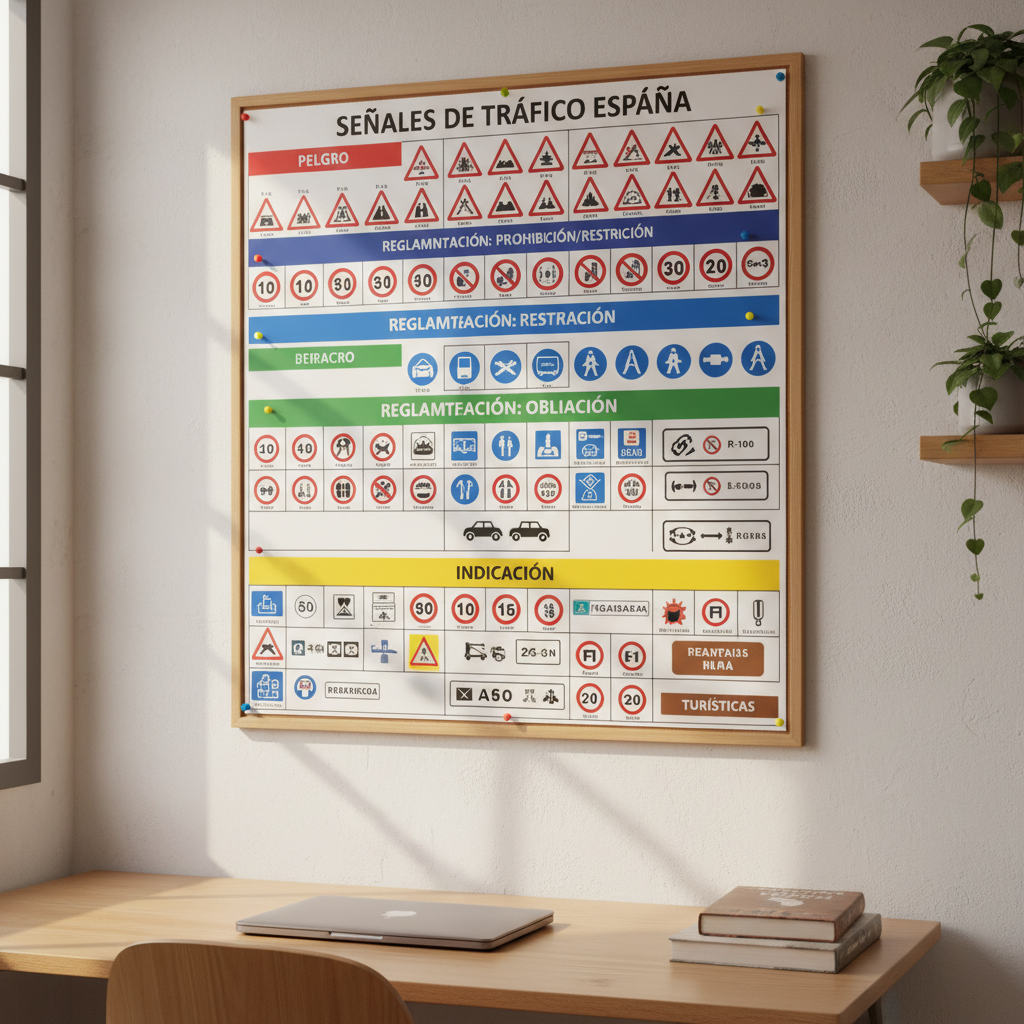
For unfamiliar signs, invest time in learning the entire Spanish sign system from the ground up, even if some signs overlap with what you already know. Use visual study aids and test yourself by identifying signs out of context. When you are driving or walking around Spain, start paying attention to the signs you see and mentally test yourself on their meaning.
Comparing Spain with Other EU Countries
It is worth noting that Spain is not unique in having a challenging theory exam. Germany has a notably difficult test with a similarly low pass rate. France and Italy also have demanding theory exams with their own quirks. However, Spain stands out for the combination of a strict error margin (only 3 mistakes allowed out of 30 questions) and the translation quality issues that disproportionately affect foreign candidates.
In the UK, for comparison, the theory test allows more questions and a higher error margin. In Germany, questions are weighted differently, giving candidates more room for error in some categories. The Spanish system is simple but unforgiving: every question carries equal weight, and the pass threshold is 90 percent correct. This leaves very little room for the kinds of errors that language barriers and cultural differences create.
The Bottom Line
The lower pass rate for foreigners on the Spanish DGT theory test is real, but it is not destiny. It reflects a combination of language barriers, cultural differences, unfamiliar regulations, and often inadequate preparation. Every single one of these factors can be addressed with the right study approach and sufficient preparation time.
If you are a foreigner preparing for the exam, give yourself more time than you think you need. Use study resources designed specifically for the Spanish DGT exam in your language. Focus extra attention on the areas where Spanish rules differ from your home country. And practice with realistic exam simulations until you are consistently scoring well above the pass threshold. The statistics say the odds are against you, but with the right preparation, you can absolutely beat those odds.