One of the most common questions I hear from English-speaking expats in Spain is deceptively simple: how do I actually book the theory test? The answer, unfortunately, is not as straightforward as you might hope. The Direccion General de Trafico (DGT) has a specific process for exam registration, and when you add the requirement of taking the test in English rather than Spanish, there are extra details you need to get right. After helping hundreds of expats through this process, I have put together this comprehensive guide so you can approach the booking with confidence.
Two Paths to Booking: Autoescuela vs. Private Candidate
Before we get into the specific steps, you need to decide which route you want to take. In Spain, there are two ways to register for the DGT theory exam. The first and most common is through an autoescuela, which is a licensed driving school. The second is registering as a private candidate, known in Spanish as "por libre." Each path has its own process, costs, and timeline, and the right choice depends on your situation.
Most expats choose to go through a driving school because the autoescuela handles the paperwork and exam scheduling on your behalf. This is especially helpful if your Spanish is limited or if you are unfamiliar with how government bureaucracy works here. Going through a school also means you will have access to their study materials and practice tests, though at SpanishDrivingTest.com we provide comprehensive English-language practice tests regardless of which registration path you choose.
Important: Whichever route you choose, you must explicitly request the English-language version of the exam during the registration process. This is not automatic, and failing to specify it could mean arriving on exam day to find your test is in Spanish.
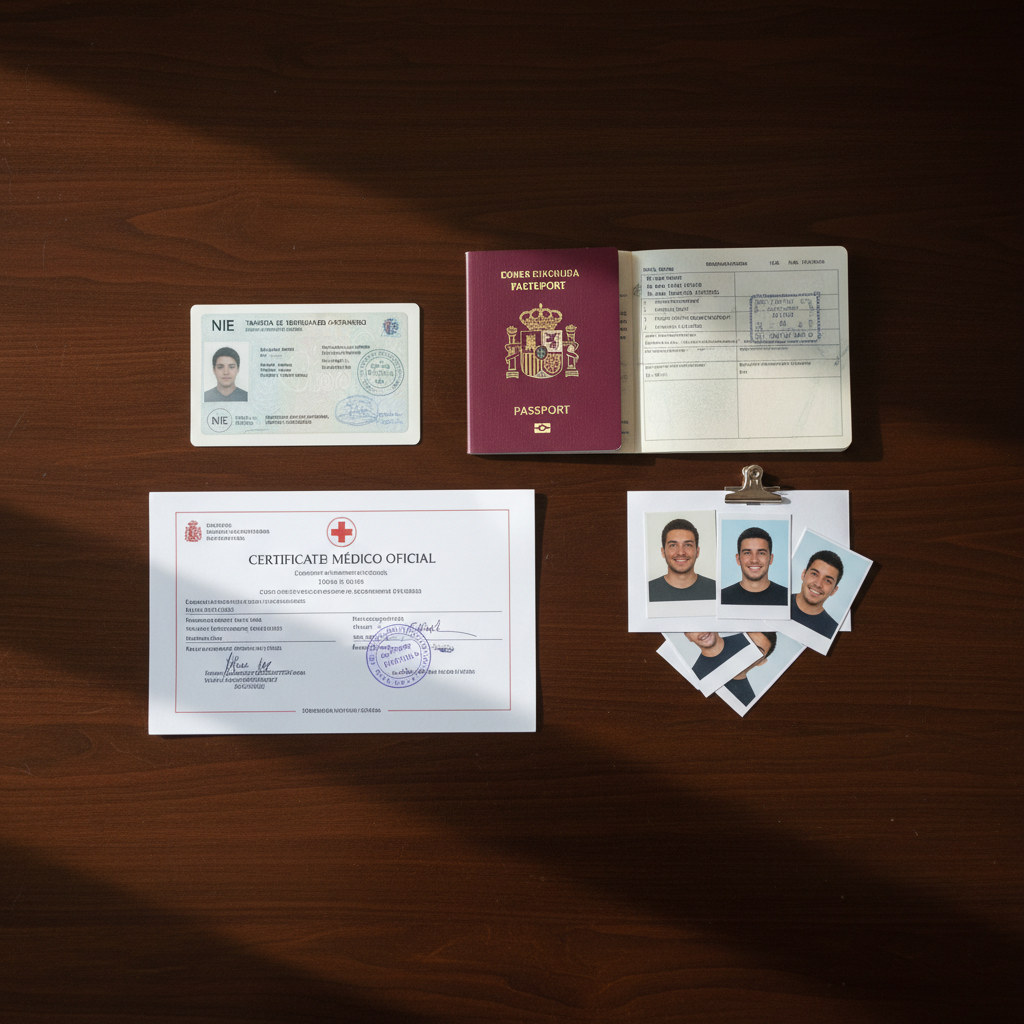
Documents You Will Need
Regardless of whether you register through a driving school or go it alone, you will need to gather the same core set of documents. Spanish bureaucracy is famously document-heavy, so it pays to have everything ready before you start the process. Missing even one item can set you back weeks.
- NIE or TIE (Numero de Identidad de Extranjero or Tarjeta de Identidad de Extranjero) - This is your foreigner identification number or card. It must be valid and not expired.
- Empadronamiento (Certificate of Registration on the Municipal Census) - This proves you are a resident in your municipality. It must typically be less than three months old.
- Certificado medico (Medical certificate) - Obtained from a centro de reconocimiento medico, this confirms you are physically and mentally fit to drive. It includes vision, hearing, and coordination tests.
- Passport-sized photographs - Usually two recent photos with a white background, though some offices now take digital photos on site.
- Original passport or national ID card - For identity verification purposes.
- Tasa 4.028 (DGT fee form) - This is the official payment form for the exam fee, currently around 94.05 euros for the full driving license process.
Step-by-Step: Booking Through a Driving School
Step 1: Choose Your Autoescuela
Your first step is selecting a driving school that has experience with English-speaking students. Not all autoescuelas are equal when it comes to supporting foreign candidates. Look for one that explicitly offers English-language support and has a track record of helping expats. Ask them directly whether they can register you for the English version of the theory exam. A good school will know exactly how to handle this.
Step 2: Enroll and Submit Your Documents
Once you have chosen a school, you will enroll and hand over your documents. The autoescuela will typically make copies of everything and begin your expediente, which is your official file with the DGT. During enrollment, make it absolutely clear that you need the exam in English. Ask them to note this on your file and confirm that they will request the English version when they schedule your exam date. Get this confirmation in writing if possible.
Step 3: Obtain Your Medical Certificate
If you have not already obtained your certificado medico, your driving school may direct you to a nearby centro de reconocimiento medico. These are private medical centers authorized by the DGT to conduct driver fitness assessments. The examination typically takes about 20 to 30 minutes and costs between 30 and 60 euros depending on the location. The doctor will check your vision, hearing, basic coordination, and ask some general health questions. The certificate is usually issued on the spot.
Step 4: Pay the DGT Fee
Your autoescuela will guide you through paying the official DGT examination fee using the Tasa 4.028 form. This can often be paid at a bank or online through the DGT website. The fee covers both the theory and practical exams and is valid for two years from the date of payment. Keep the receipt, as you will need proof of payment.
Step 5: Wait for Your Exam Date
After your driving school submits your paperwork to the Jefatura Provincial de Trafico (the provincial traffic office), you will be assigned an exam date. The waiting time varies significantly depending on your province. In busy cities like Madrid and Barcelona, you might wait four to eight weeks. In smaller provinces, it could be as little as two to three weeks. Your autoescuela will inform you of the date once it is confirmed.
The biggest mistake I see English-speaking students make is not confirming the language request early enough. By the time they realize the exam is set in Spanish, it can be too late to change without losing their exam slot.
How to Specify the English Language
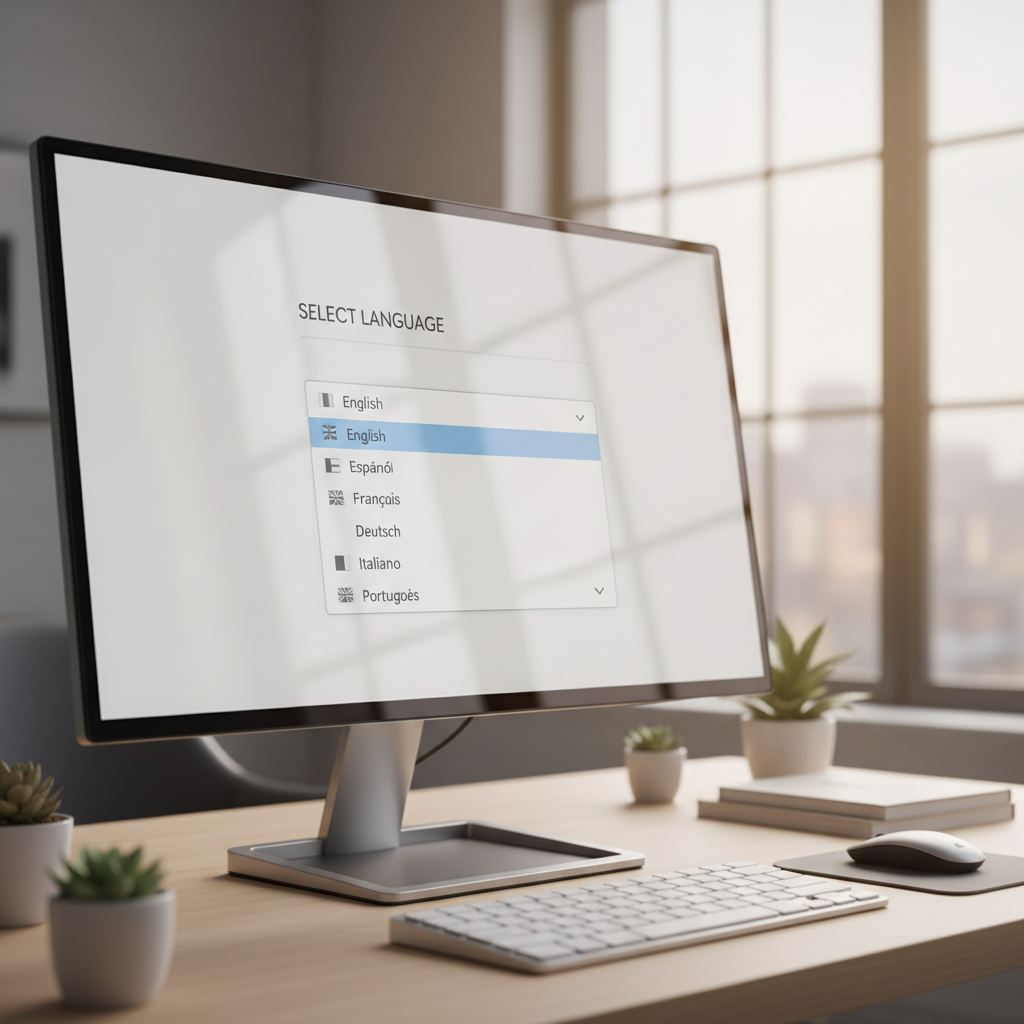
This is the step that trips up more expats than any other. When your autoescuela submits the application to the DGT, there is a field on the form where the language of the exam must be specified. The DGT offers the theory test in several languages including English, French, German, and Arabic, in addition to the co-official languages of Spain. However, this must be requested at the time of registration, not on exam day.
If you are registering through a driving school, insist that they mark English as your exam language on the application form. Ask to see the form before it is submitted if possible. If you are registering as a private candidate at the DGT office, you will fill in this field yourself on the solicitud form. Double-check it before submitting.
Timeline Expectations
Understanding the typical timeline helps you plan your study schedule and manage expectations. Here is a realistic breakdown of how long each stage usually takes from start to exam day.
- Gathering documents (NIE, empadronamiento, photos): 1 to 4 weeks, depending on whether you already have your NIE
- Medical certificate appointment and issuance: 1 to 3 days
- Driving school enrollment and paperwork submission: 1 to 2 weeks
- DGT processing and exam date assignment: 2 to 8 weeks depending on province
- Total estimated timeline from start to exam: 4 to 12 weeks
These timelines can vary significantly by region. Major cities tend to have longer wait times simply because of higher demand. If you are in a hurry, some expats choose to register in a neighboring province with shorter wait times, though this requires having an empadronamiento in that province.
Fees Breakdown
Understanding the costs involved helps you budget for the entire process. Keep in mind that fees can change, so always verify current amounts with your autoescuela or the DGT website.
- DGT examination fee (Tasa 4.028): approximately 94.05 euros
- Medical certificate (certificado medico): 30 to 60 euros
- Driving school enrollment and theory preparation: 200 to 500 euros (varies widely)
- Passport photographs: 5 to 10 euros
- Total estimated cost through a driving school: 330 to 665 euros
- Total estimated cost as a private candidate: 130 to 170 euros (exam fee, medical, and photos only)
What Happens on Exam Day
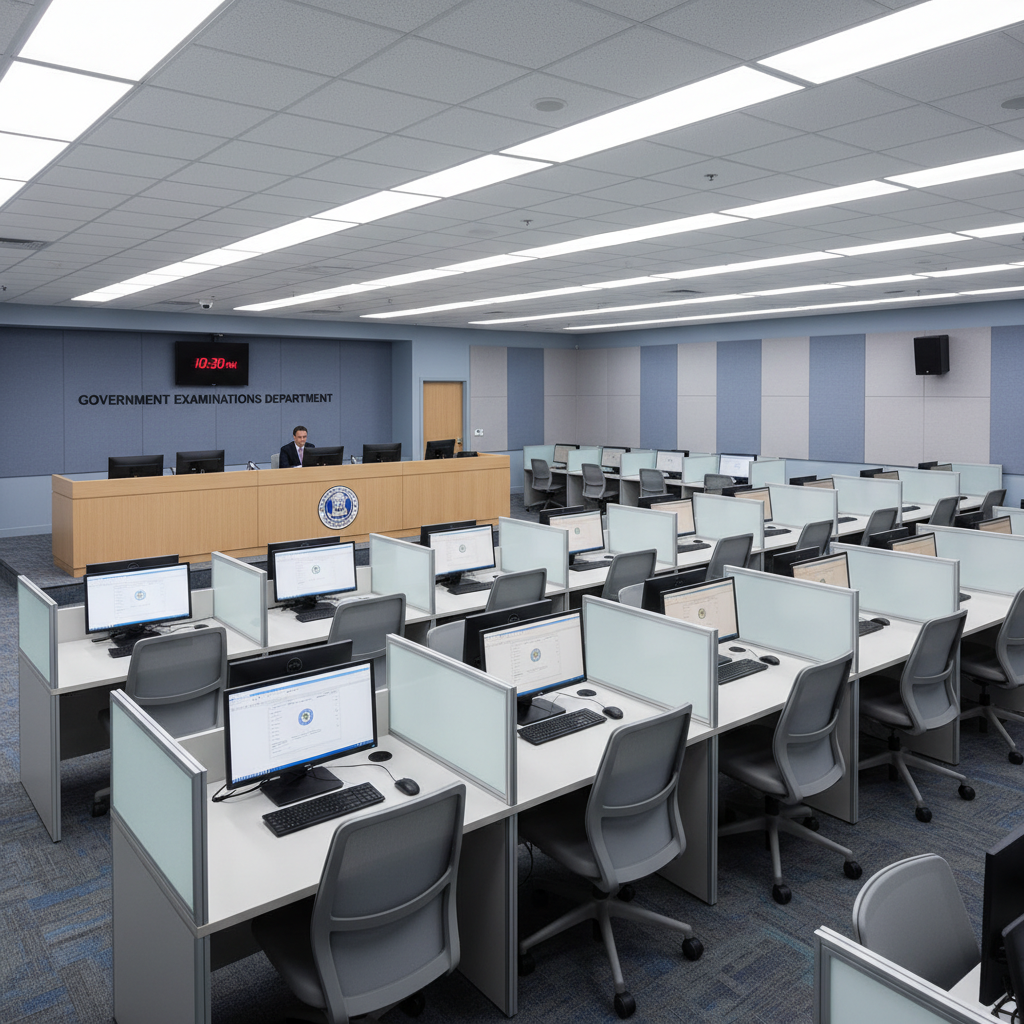
On the day of your exam, you will go to the Jefatura Provincial de Trafico in your province. If you registered through a driving school, your instructor or a school representative may accompany you, which can be reassuring if it is your first time at the DGT office. Bring your original identification (NIE/TIE and passport) as you will need to present it before entering the exam room.
You will be directed to a waiting area and then called into the exam room in groups. The exam is taken on a computer with a touchscreen. When the system loads, verify immediately that the questions are displayed in English. If they are not, raise your hand and inform the examiner before you begin. Do not start answering questions in the wrong language, as this will waste precious time from your 30-minute allowance.
Tips for a Smooth Booking Process
- Start gathering your documents as early as possible, especially the NIE and empadronamiento which can take time to obtain
- Choose a driving school with proven experience helping English-speaking students
- Confirm the English language request in writing with your autoescuela
- Pay the DGT fee promptly to avoid delays in your application processing
- Begin studying well before your exam date is confirmed using resources like SpanishDrivingTest.com
- Arrive at the DGT office at least 30 minutes before your scheduled exam time
- Bring all original documents with you on exam day, even if you think they are not needed
Booking the Spanish DGT theory test in English does not have to be overwhelming. With the right preparation and attention to detail during registration, you can navigate the process smoothly and focus your energy on what really matters: studying for and passing the exam. Use the practice tests and study guides at SpanishDrivingTest.com to make sure you are fully prepared when your exam day arrives.